
Millet Laddus: A Guide to Ragi, Kambu, Thinai and Varagu Laddus
09 November 2026 · Orgville Team
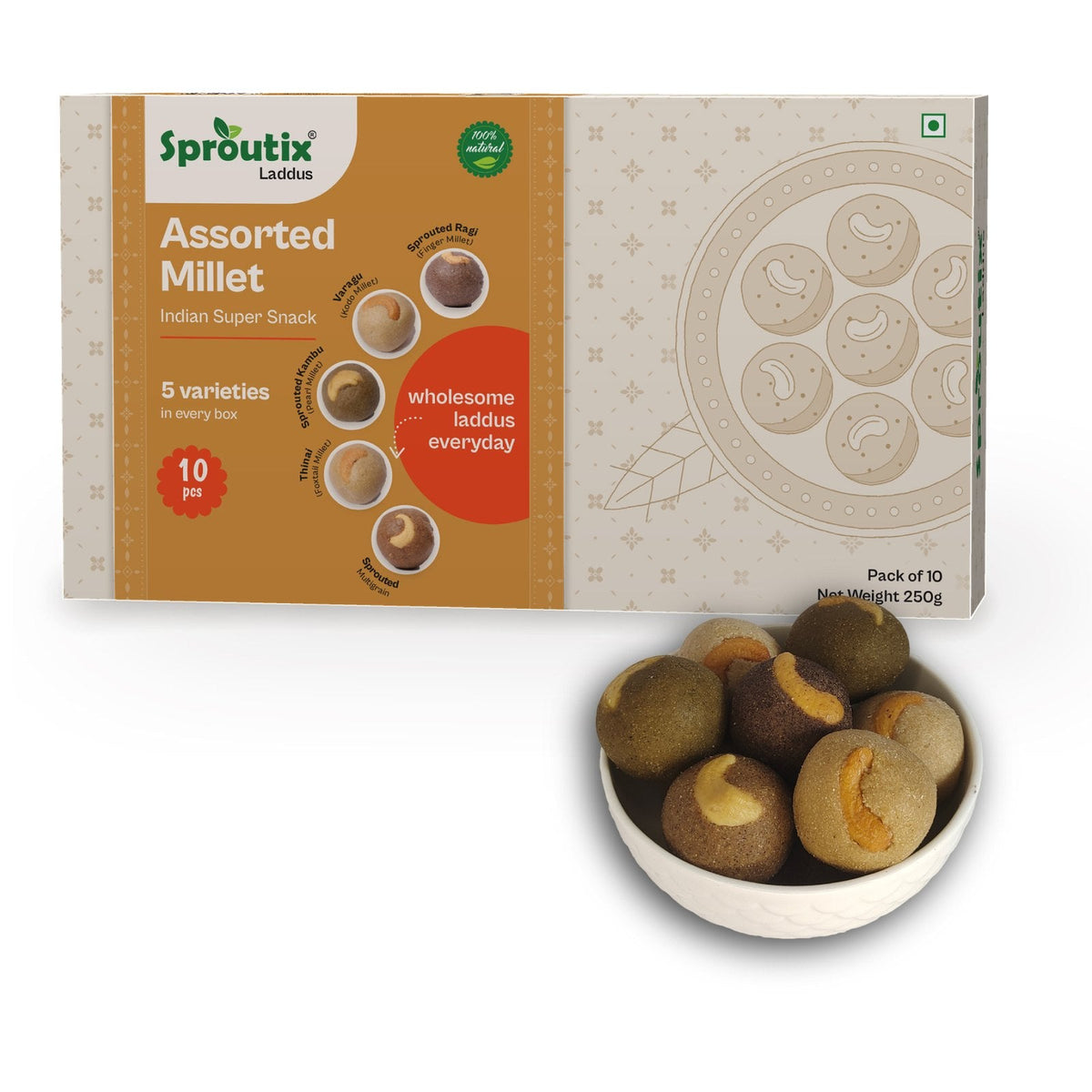
A millet laddu is a round sweet made from roasted millet flour bound with jaggery and ghee. In Tamil Nadu the four common millets for laddus are ragi (finger millet), kambu (pearl millet), thinai (foxtail millet) and varagu (kodo millet). Each tastes different, and a good one lists only the millet, jaggery, ghee, nuts and cardamom on the label, with no maida, refined sugar or preservatives.
The four millet laddus compared
| Laddu | Millet | Taste and texture | Good to know |
|---|---|---|---|
| Ragi laddu | Finger millet (kezhvaragu) | Deep brown, earthy, a little chocolatey | Ragi is one of the richest plant sources of calcium among cereals |
| Kambu laddu | Pearl millet (bajra) | Grey-green, nutty, slightly coarse | The grain behind kambu koozh and kambu adai |
| Thinai laddu | Foxtail millet | Light golden, mild and sweet | The gentlest taste, a good first millet laddu for children |
| Varagu laddu | Kodo millet | Earthy and nutty | Naturally high in fibre |
If you cannot decide, the Assorted Millet Laddus box mixes all four.
Sprouted or not?
Some laddus use sprouted millet flour. The grain is soaked until it sprouts, then dried, roasted and milled. Sprouting is a traditional step that makes the flour lighter and gives a nuttier, naturally sweeter taste. Sproutix ragi and kambu laddus are made with sprouted millet. Thinai and varagu laddus use roasted, unsprouted millet.
What to check on the label
- Sweetener: jaggery, dates or palm jaggery rather than white sugar.
- Fat: desi ghee (clarified butter) rather than vanaspati or palm oil.
- Flour: the millet should be the first ingredient, with no maida (refined wheat flour) used as filler.
- Preservatives: none should be needed. Shelf life then depends on packing: about six weeks for a normal box, longer for modified-atmosphere or nitrogen-flushed packs.
- Licence: an FSSAI licence number and the maker's address should be printed on the pack.
How many can a child have?
A typical millet laddu weighs about 25 g. One or two make a filling tiffin-box or after-school snack. Laddus are still a sweet, so treat them as a snack rather than a meal. For lunch-box ideas, see What goes in the tiffin box.
Storing millet laddus
Keep them in a closed box in a cool, dry place away from sunlight. Once opened, move them to an airtight container and finish within a couple of weeks. In very hot or humid weather you can refrigerate them; let them come to room temperature before eating so the ghee softens.
Frequently asked questions
Which millet laddu is best for kids?
Thinai has the mildest taste and is the easiest start. Ragi is the traditional choice for growing children in South India because of its calcium.
Are millet laddus gluten-free?
Ragi, kambu, thinai and varagu are naturally gluten-free grains. Sproutix single-millet laddus contain no wheat or barley, but they are packed in a unit that also handles wheat, so they are not certified gluten-free.
Do millet laddus contain sugar?
Sproutix laddus use jaggery and no refined sugar. Jaggery is still a sugar, so enjoy them in moderation.
Can I order millet laddus online in Tamil Nadu?
Yes. Sproutix laddus ship from Dindigul. Prepaid orders get free delivery from ₹499 within Tamil Nadu and Puducherry, and from ₹999 elsewhere in India.
