
What Is Sathu Maavu? A Guide to Sprouted Multigrain Health Mix
09 November 2026 · Orgville Team
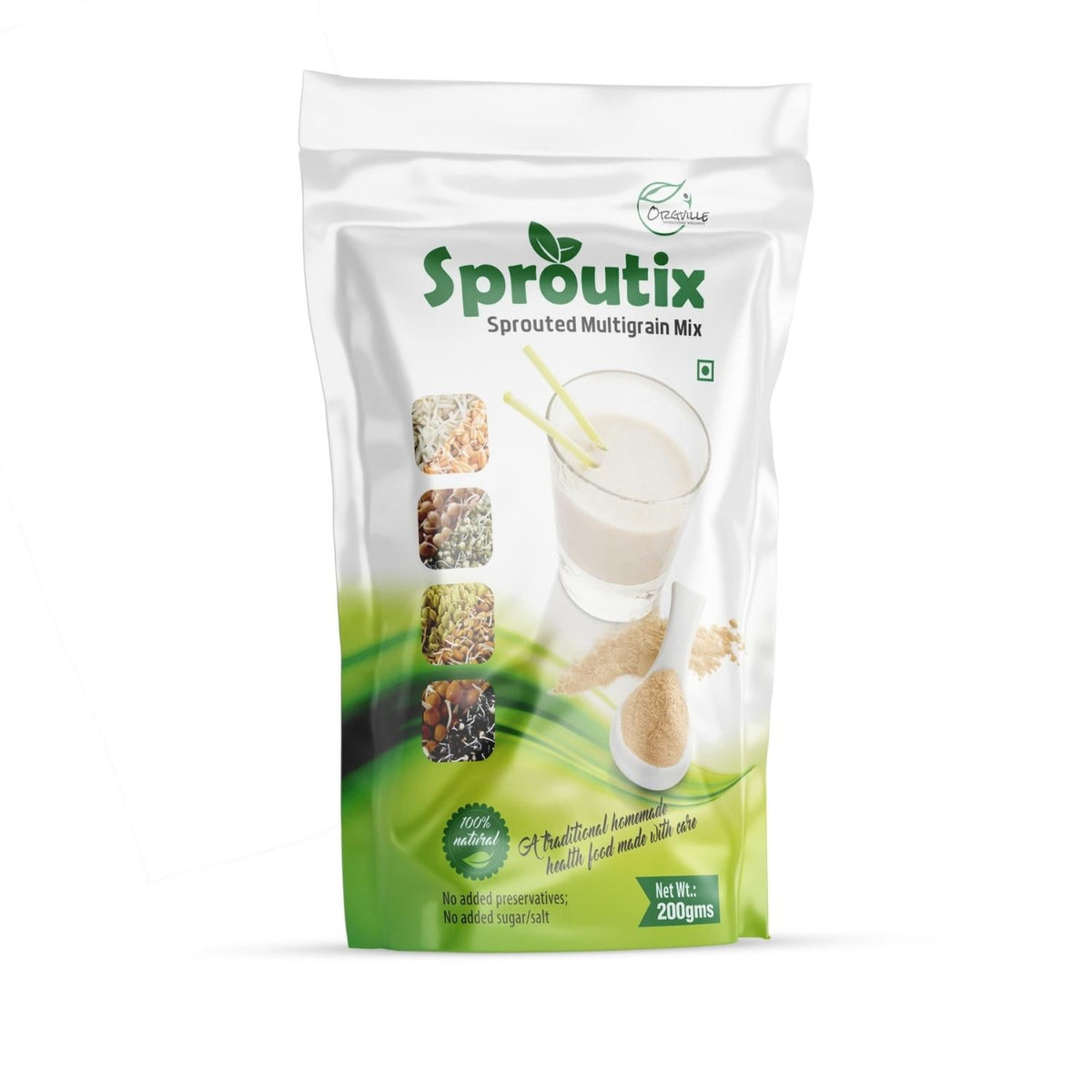
Sathu maavu (சத்து மாவு, "nutrition flour") is a Tamil health mix made by roasting and milling grains, millets, pulses and nuts together. You whisk two spoons into water or milk and cook it for five to seven minutes to get a thick porridge (kanji or koozh) that families in Tamil Nadu have served for breakfast for generations. The best versions sprout most of the grains before they are dried and roasted.
What goes into sathu maavu?
There is no single recipe. Every household and brand has its own mix, but most contain three groups:
- Millets: ragi (finger millet), kambu (pearl millet), cholam (sorghum), thinai (foxtail), varagu (kodo), samai (little) and kuthiraivali (barnyard).
- Pulses: green gram, horse gram, black gram, chickpeas and sometimes soybean.
- Nuts and extras: almonds, cashews, peanuts, flaxseed, and dried ginger or cardamom for flavour.
The Sproutix Sprouted Multigrain Mix uses 26 of these. Fourteen are sprouted before roasting (including ragi, kambu, green gram, horse gram and sorghum) and twelve are roasted as they are (including almonds, cashews, black rice, red rice and four native millets). It has no added sugar, jaggery or preservative.
Why sprout the grains first?
Sprouting (mulaikattiya in Tamil kitchens) means soaking the grain until a tiny shoot appears, then drying and roasting it. It is a traditional step because it softens the grain, makes the flour lighter and quicker to cook, and gives it a nuttier, slightly sweet taste. It also takes time: a sprouted mix needs a day or more of soaking, sprouting and sun- or shade-drying before milling, which is why many commercial mixes skip it. You can read how we do it in Why we sprout the grain before we mill it.
How to make sathu maavu porridge
- Whisk 2 tablespoons of sathu maavu into 1 cup of cold water or milk until there are no lumps.
- Cook on a low flame for 5 to 7 minutes, stirring all the time, until it thickens and smells roasted.
- Sweet: stir in jaggery or dates powder and a pinch of cardamom. Savoury: let it cool, add buttermilk and salt, and finish with chopped onion.
For two more versions, see Sprouted multigrain porridge, two ways.
Sathu maavu, ragi malt or millet porridge: which one?
- Sathu maavu is the all-rounder: many grains, pulses and nuts in one flour, sweet or savoury.
- Ragi malt is mostly finger millet, usually sweetened and drunk with milk. Our Choco Ragi Malt adds cocoa for children who want a chocolate drink.
- Savoury millet porridge is a ready-seasoned kanji. The Sproutix Sprouted Millet Porridge Mix has chilli, garlic and fenugreek and no added sugar, for people who prefer a salty breakfast.
Who is it for?
Sathu maavu is eaten by the whole family in Tamil Nadu, from school children to grandparents. It is filling, quick to cook and easy to vary. Most mixes contain gluten (wheat and barley), soy, peanuts and tree nuts, so check the label if anyone in the family has an allergy. For babies and toddlers, ask your paediatrician before introducing a new multigrain food.
How to store it
Keep the pouch sealed in a cool, dry place and use a dry spoon. Once opened, move it to an airtight jar. A well-roasted mix keeps for about six months unopened.
Frequently asked questions
Is sathu maavu the same as health mix powder?
Yes. "Health mix", "multigrain porridge mix" and "sathu maavu" all describe the same kind of roasted multigrain flour. The ingredients and whether the grains are sprouted differ from brand to brand.
Can I drink sathu maavu every day?
Yes. In Tamil homes it is an everyday breakfast or evening drink. Vary the sweetener, or switch to the savoury buttermilk version.
Can I make laddus with sathu maavu?
Yes. Roast the flour lightly in ghee, mix in powdered jaggery and shape it into balls while warm. Or try Sproutix Sprouted Multigrain Laddus, made from the same 26-grain sprouted flour.
Where is Sproutix sathu maavu made?
In Orgville's own FSSAI-licensed unit in Dindigul, Tamil Nadu (FSSAI Lic. 12421006001387), in small batches.
