
How to Choose a Good Sathu Maavu: A Buyer's Checklist
10 November 2026 · Orgville Team
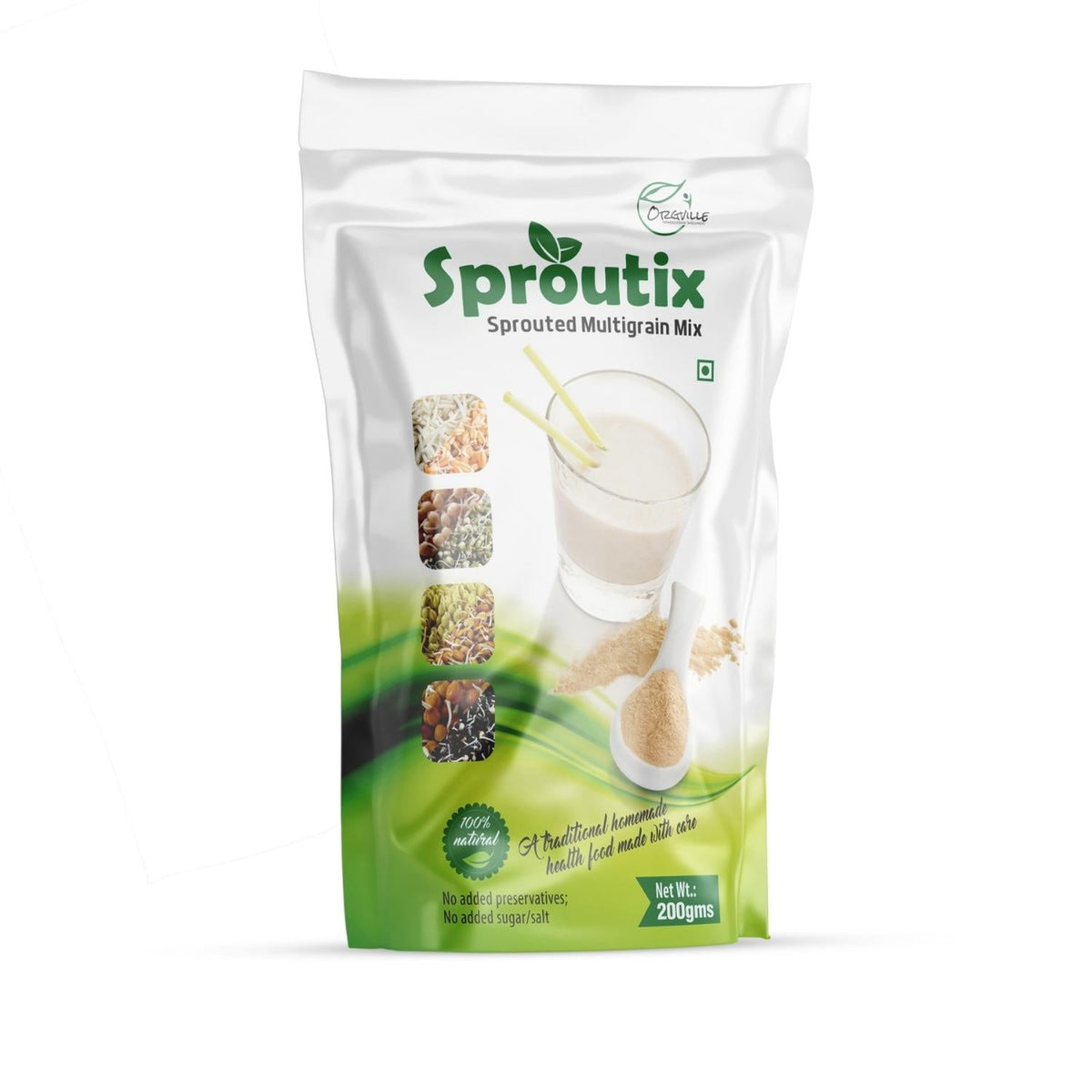
A good sathu maavu (Tamil multigrain health mix) lists whole grains, millets and pulses as its first ingredients, has no added sugar, maltodextrin or milk solids, names any allergens clearly, and carries a recent manufacturing date and an FSSAI licence number. Sprouted mixes cost more to make and cook a little faster, with a nuttier taste. Everything else, including the number of grains, matters less than people think.
The 7-point label checklist
- The first three ingredients. Ingredients are listed by weight. They should be grains, millets or pulses such as ragi, kambu, cholam, green gram or horse gram, not sugar, wheat flour or a "cereal base".
- Sprouted or not. A sprouted mix says so and names which grains were sprouted. "Multigrain" alone does not mean sprouted. Read why we sprout before we mill for what the step involves.
- No added sweetener. Look for sugar, jaggery, maltodextrin, glucose or "malt extract". An unsweetened mix lets you control the sweetness, or make it savoury with buttermilk.
- No milk solids or flavourings, unless you want a ready-sweetened drink rather than a porridge flour.
- Allergens named. Most mixes contain gluten (wheat, barley), soy, peanuts and tree nuts. A clear allergen line is a sign of a careful maker.
- Freshness. Roasted flours keep for about six months. Check the manufacturing date, not just the expiry.
- FSSAI licence and address. Every packed food sold in India must print the maker's FSSAI licence number. If you can't find one, don't buy it.
Does the number of grains matter?
Not much on its own. A 10-grain mix built mostly on millets and pulses can be better than a 40-grain mix that is mostly wheat. Read the order of the list rather than the number on the front of the pack. The Sproutix Sprouted Multigrain Mix has 26 ingredients, 14 of them sprouted, and lists every one with the sprouted and unsprouted grains shown separately.
Sprouted vs unsprouted sathu maavu
| Sprouted mix | Plain roasted mix | |
|---|---|---|
| How it's made | Grains soaked until they sprout, dried, roasted, milled | Grains roasted and milled |
| Taste | Nuttier, slightly sweet | Toastier, plainer |
| Cooking | Thickens quickly, smooth texture | Can need a little longer |
| Price | Higher (a day or more of extra work per batch) | Lower |
Compare by price per 100 g
Pack sizes vary, so divide the price by the weight. For example, Sproutix Sprouted Multigrain Mix costs ₹135 for 200 g (₹67.50 per 100 g) or ₹295 for 500 g (₹59 per 100 g). A serving is about two tablespoons, so a 500 g pack makes roughly 25 bowls.
Frequently asked questions
Which is the best sathu maavu brand?
The best one is the one whose label passes the checklist above and whose taste your family likes. Start with a small pack before committing to a large one. If you want a sprouted mix with no added sugar, the Sproutix mix is made in small batches in Dindigul, Tamil Nadu.
Is sathu maavu good for babies?
Many Tamil families give it to toddlers. Ask your paediatrician before introducing any new multigrain food, introduce it a spoon at a time, and watch for allergies, since most mixes contain gluten, soy and nuts.
Can people watching their sugar have sathu maavu?
Choose an unsweetened mix and make it savoury with buttermilk, or try a savoury millet porridge such as Sproutix Sprouted Millet Porridge Mix, which has no sugar or jaggery. Talk to your doctor about your own diet.
How should I store it?
In an airtight jar in a cool, dry place, always with a dry spoon. Use it within the shelf life printed on the pack.
New to sathu maavu? Start with What is sathu maavu? and the recipe Sprouted multigrain porridge, two ways.
